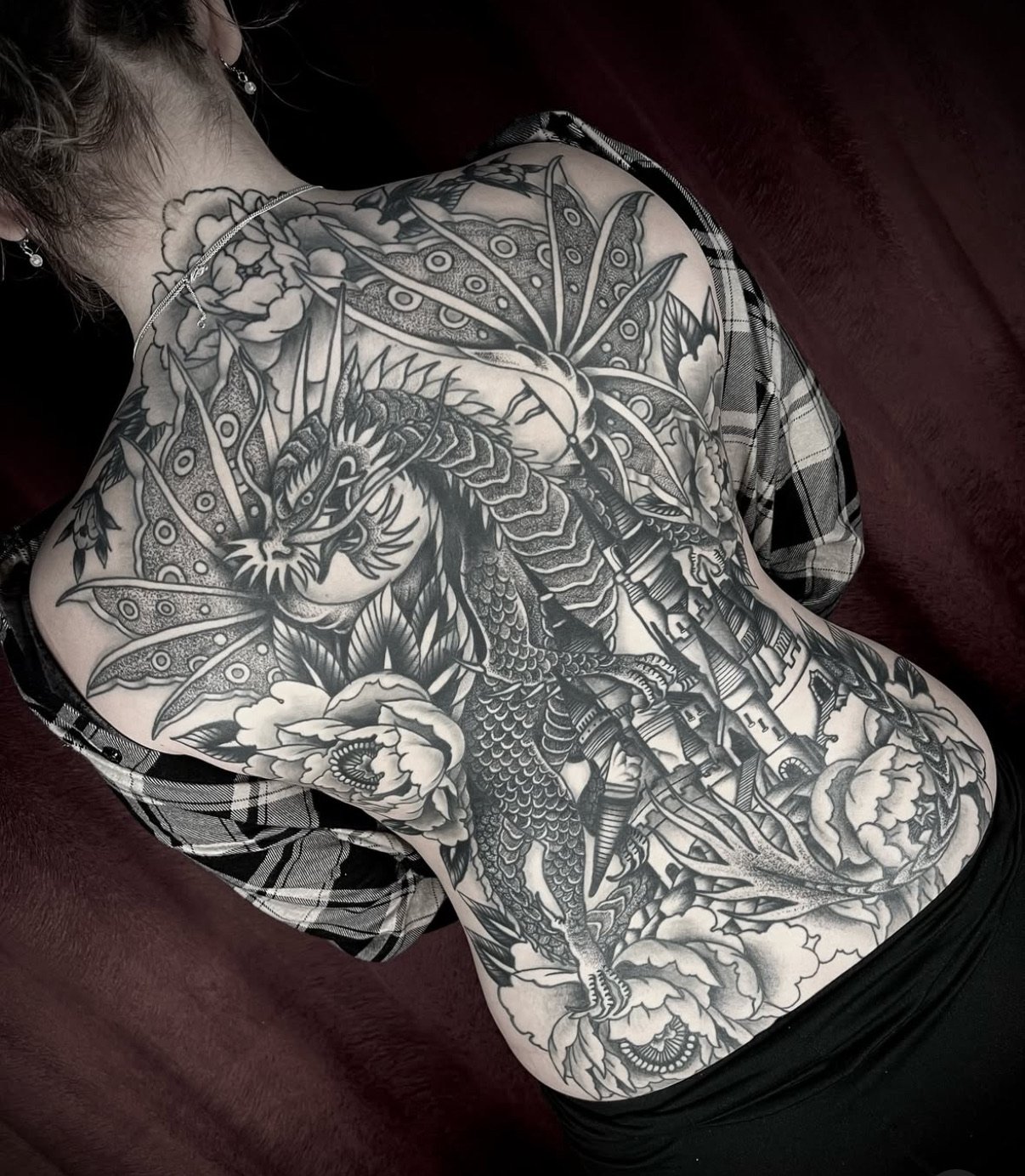
Traditional & Japanese Dragon Tattoos
Traditional Dragon Tattoos & Japanese Dragon Tattoos — Power in Two Forms
Dragon tattoos have always carried serious weight. Bold, commanding, and rich in symbolism, they’ve earned their place as one of the most respected motifs in tattooing. But not all dragons mean the same thing.
In tattoo culture, traditional dragons and Japanese dragons share strength and presence, yet tell very different stories. Understanding those differences is what turns a good tattoo into a meaningful one.
Traditional Dragon Tattoos — Raw Power & Defiance
Traditional dragon tattoos, often seen in American and European tattooing, lean into ideas of raw strength, danger, and dominance. These dragons are usually fierce and confrontational — symbols of power, rebellion, and standing your ground against whatever comes your way.
In bold traditional tattooing, dragons are simplified and striking. Thick black outlines, strong contrast, and limited colour palettes keep the design clean and punchy. These tattoos are about impact — confidence, courage, and not backing down.
A traditional dragon tattoo often appeals to people who want something unapologetic. It’s a symbol of independence, control, and embracing your own strength without compromise.
Japanese Dragon Tattoos — Wisdom, Balance & Protection
Japanese dragons tell a very different story. In Japanese mythology, dragons are not destructive monsters — they’re wise, protective beings tied closely to nature. Often associated with water, rain, clouds, and the sea, Japanese dragons represent balance, guidance, and good fortune.
A Japanese dragon tattoo symbolises strength that comes from wisdom rather than aggression. It’s about mastery — of self, of circumstance, of life’s challenges. These dragons are powerful, but controlled. Calm, but never weak.
In traditional Japanese tattooing, dragons flow with the body. Their long, serpentine forms make them ideal for large-scale tattoos like backs, sleeves, ribs, and legs. Paired with elements like waves, wind bars, peonies, or chrysanthemums, they become part of a larger story rather than a standalone image.
Style & Design Differences
While both styles are bold, the approach is different:
Traditional dragons focus on impact, symmetry, and strength
Japanese dragons focus on movement, flow, and balance
Traditional designs are often more compact and graphic
Japanese designs are expansive, detailed, and designed to move with the body
Neither is better — they simply speak to different energies and personalities.
Choosing the Right Dragon for You
Choosing between a traditional dragon tattoo and a Japanese dragon tattoo often comes down to what resonates with you personally.
If you’re drawn to bold imagery, classic tattoo culture, and a design that feels loud and fearless, a traditional dragon might be the right fit. If you connect more with symbolism, mythology, and tattoos that tell a deeper story across the body, a Japanese dragon may speak to you more.
Both styles are timeless. Both carry power. And when done well, both age beautifully.
Contact us today for a free face to face consult and a booking for your next dragon tattoo!