
Japanese Hannya Tattoo Meaning
-
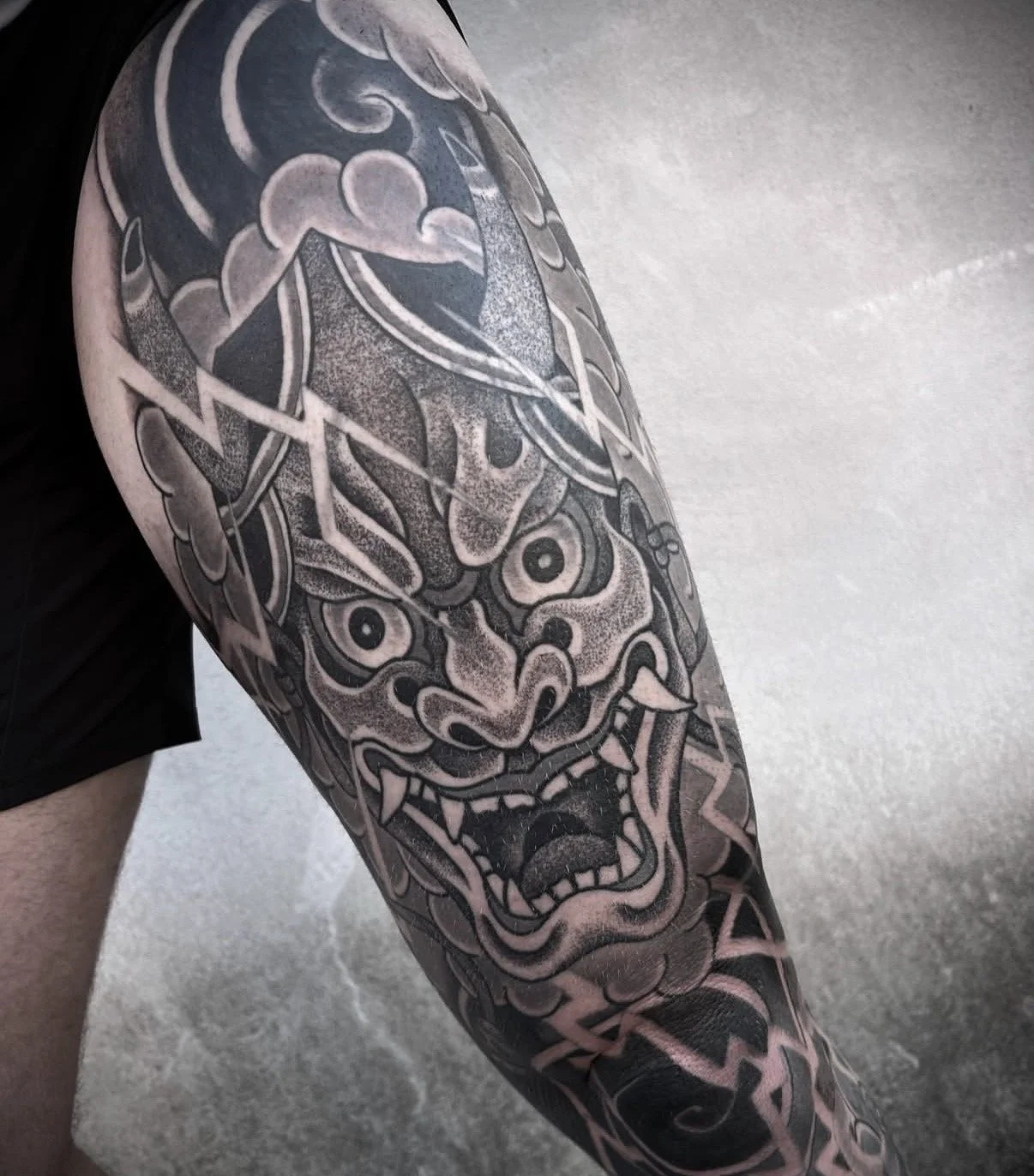
Background of Japanese Hannya Tattoo
The Hannya is a classic Japanese tattoo that represents a mask of a woman turned into a vengeful demon. The Hannya is a woman that has been completely consumed by jealousy, heartbreak, and resentment. So much so that she has turned into a monster known as Oni or Kijo.
Unlike Oni, who are demons and monsters that come from hell, Kijo are almost always human women that have been overwhelmed by certain emotions that they turn into monsters.
The Hannya originates from 14th Century Noh Theatre. A famous instant of the use of a Hannya is Lady Rokujo from the Tale of Genji, a mistress of the protagonist who becomes obsessed and jealous.
-
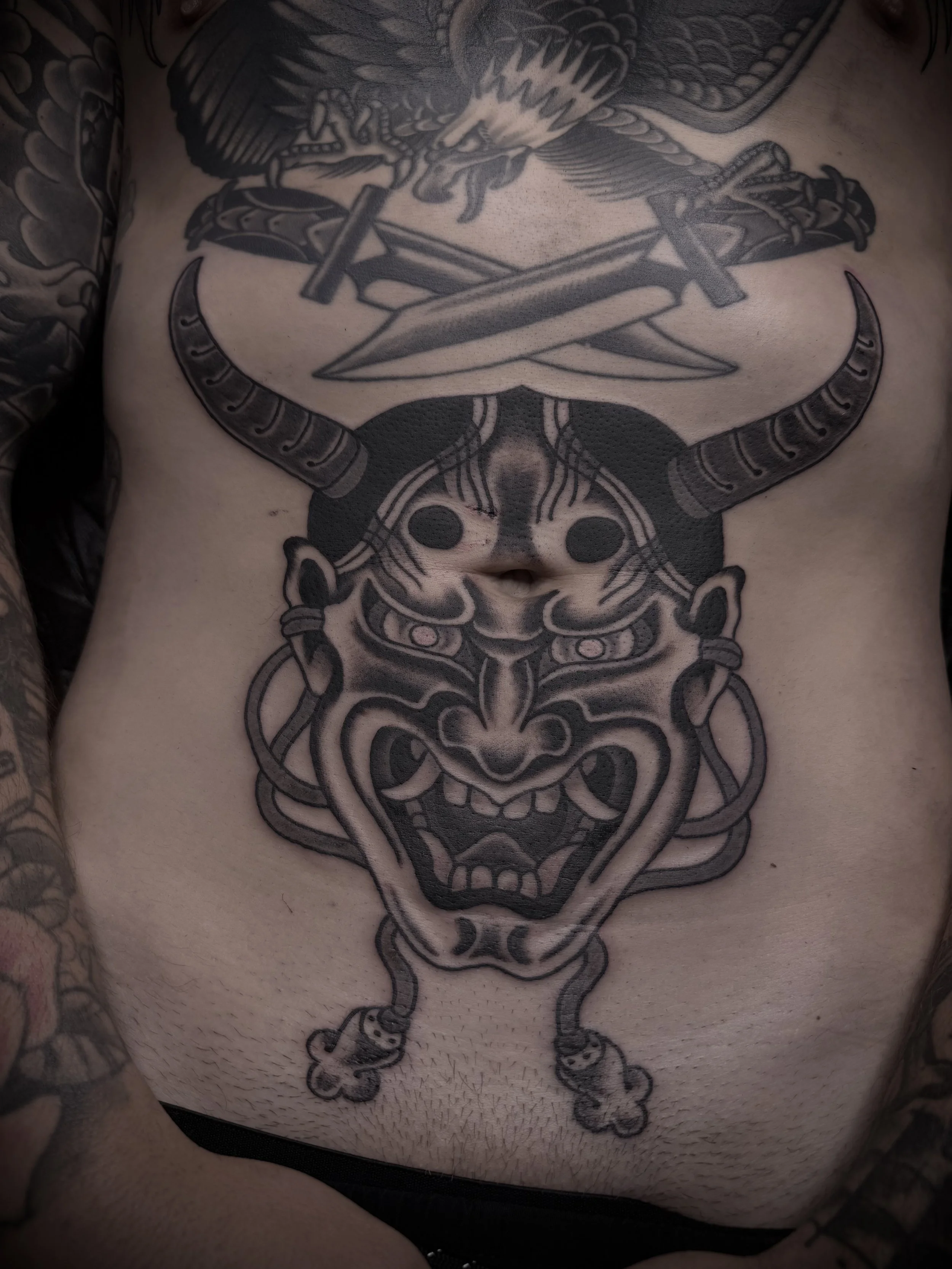
Meaning of Japanese Hannya Tattoo
Even though the Hannya most explicitly represents jealousy, envy, rage and anger, it also has a positive aspect to it.
The literal translation of Hannya in Sanskrit is wisdom. Hannya masks are considered a symbol of good luck and are powerful talismans to ward off evil. Hannya masks help keep negative energies away and, if kept in the house, prevent certain misfortunes to the household.
They are a powerful symbol and make for an excellent tattoo, either in black and grey or colour.If you’re thinking of getting a colour Hanna tattoo, it’s important to know that there are different meanings to each colour:
A white Hannya, called Shiro Hannya, defines a woman of noble birth
A pale red Hannya, called Aka Hannya, defines a woman of lower class
A deep red or black Hannya, called Kuro Hannya, is a woman who has completely lost all sense of humanity and has turned into a demon
-
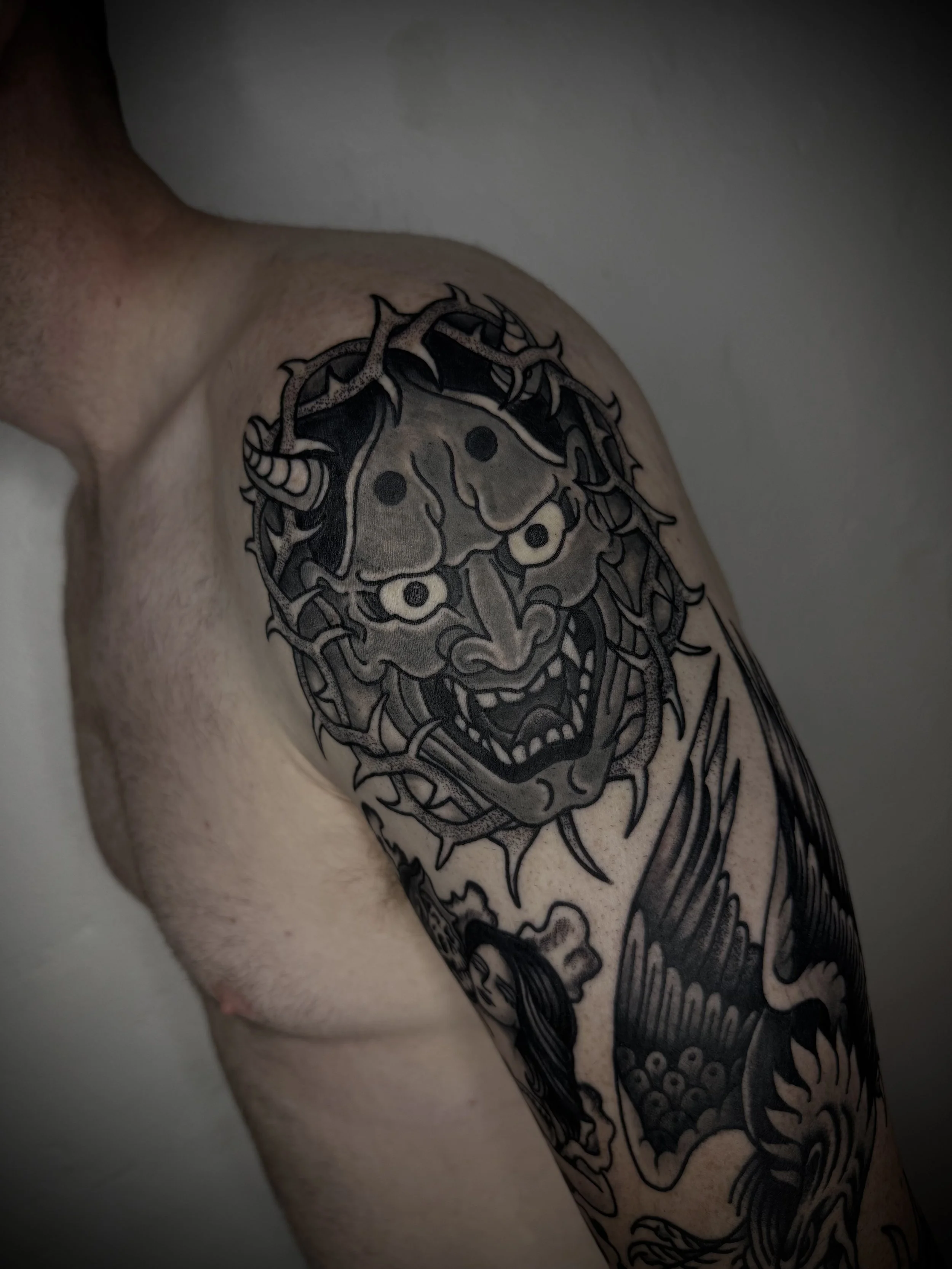
Getting a Japanese Hannya Tattoo
Japanese Hannya tattoos work well as a small or large piece and make great coverups! They look great anywhere as they move well with the body.
If you’re interested in getting a Japanese Hannya tattoo, contact us by clicking on the ‘book now’ button below, we are always happy to discuss ideas and designs during our free face to face consultations, especially if you’re after a larger piece or a coverup of existing work.