
Traditional Devil & Demon Tattoo Meaning
-
History of Devils & Demons
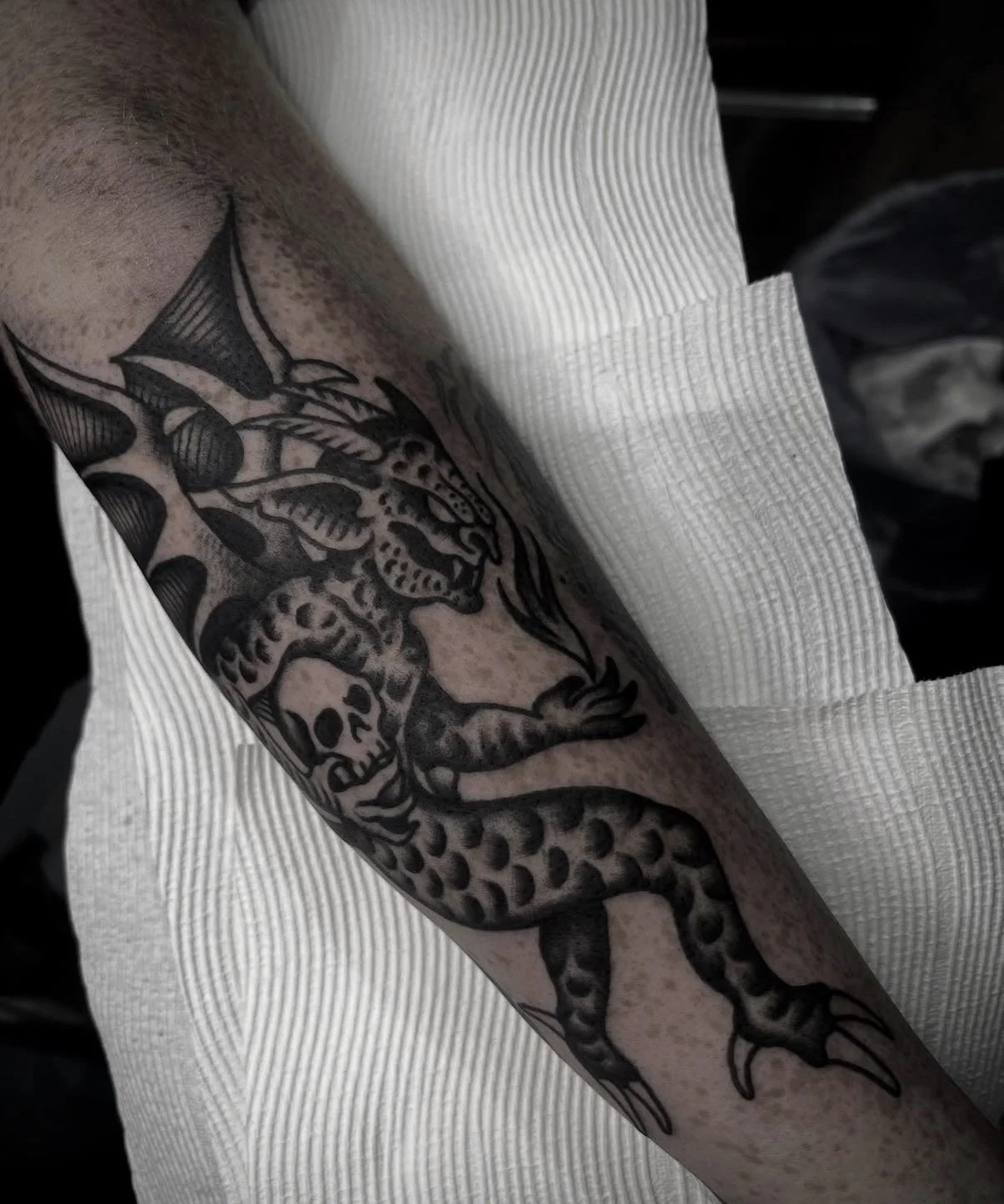
Devil and demon imagery has been around a lot longer than tattooing itself, drawing on centuries of folklore and religious symbolism from cultures all over the world. In Christian tradition the devil is usually pictured as a fallen angel, tempting people toward sin — but versions of horned, goat-like or malevolent spirit figures show up across Mesopotamian mythology, medieval art and Japanese folklore too, each with their own flavour of "the darker side" of human nature.
In tattooing, the devil found its home in traditional flash. Circus sideshows and travelling tattooists were putting bold, striking imagery like devils and demons on their flash sheets well before the style was standardised, using them to shock and draw a crowd. When Norman "Sailor Jerry" Collins refined the American Traditional look in Honolulu through the 1940s and 50s, the red-skinned, horned devil with a pitchfork and mischievous grin became one of the genre's enduring emblems, sitting alongside skulls, panthers and pin-ups.
-
Symbolism of Devils & Demon Tattoos
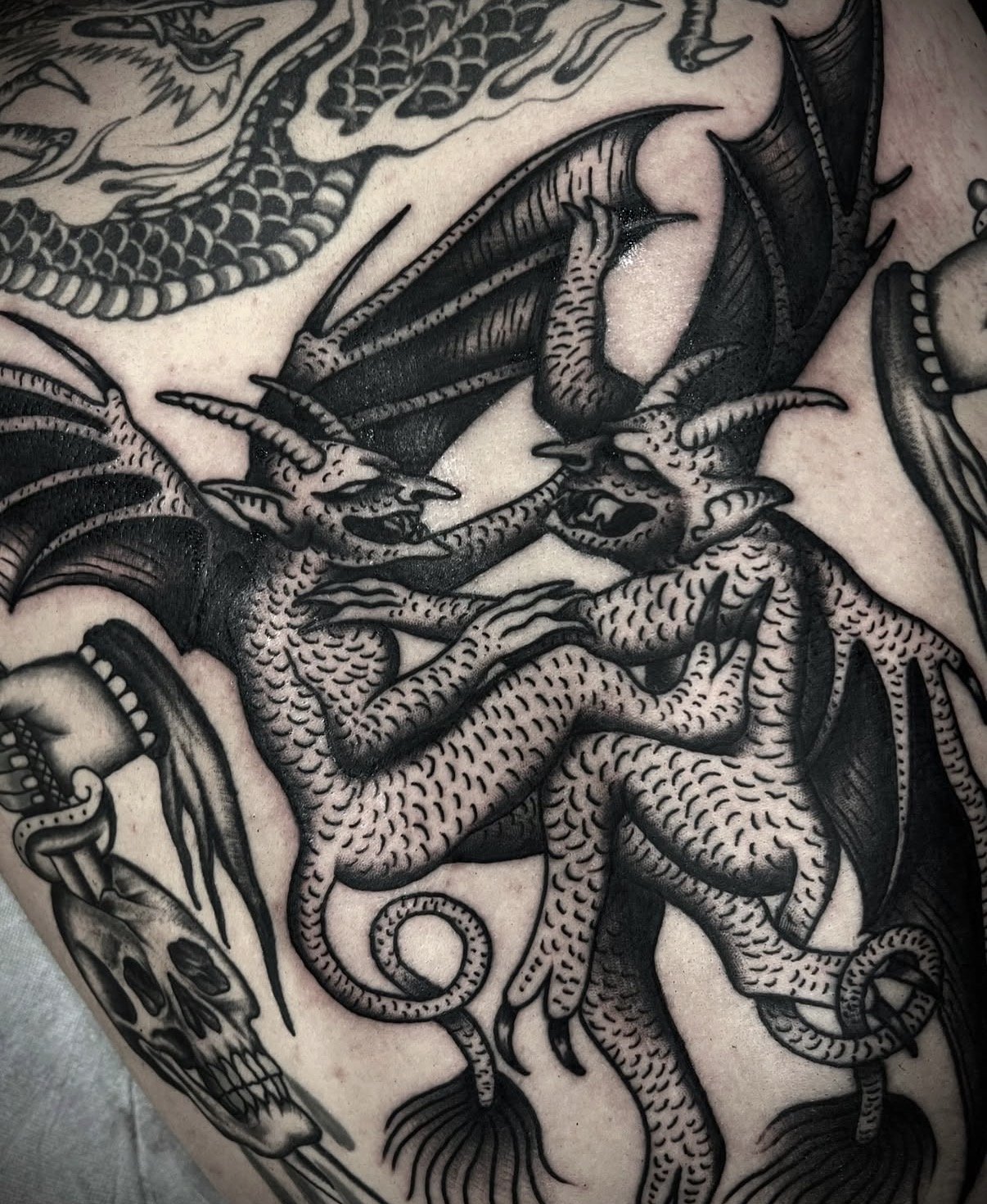
Symbolically, a devil or demon tattoo rarely means "pure evil" to the person wearing it. It's more often worn as a nod to a rebellious streak, a reminder of vices like drink, gambling or a wild past, or a way of confronting and owning a personal struggle rather than hiding from it. There's also an older protective thread running through this imagery — fearsome figures were historically placed on doorways, armour and buildings to ward off harm, and some people wear a devil tattoo in that same spirit: fighting fire with fire.
-
Getting a Traditional Devil or Demon Tattoo
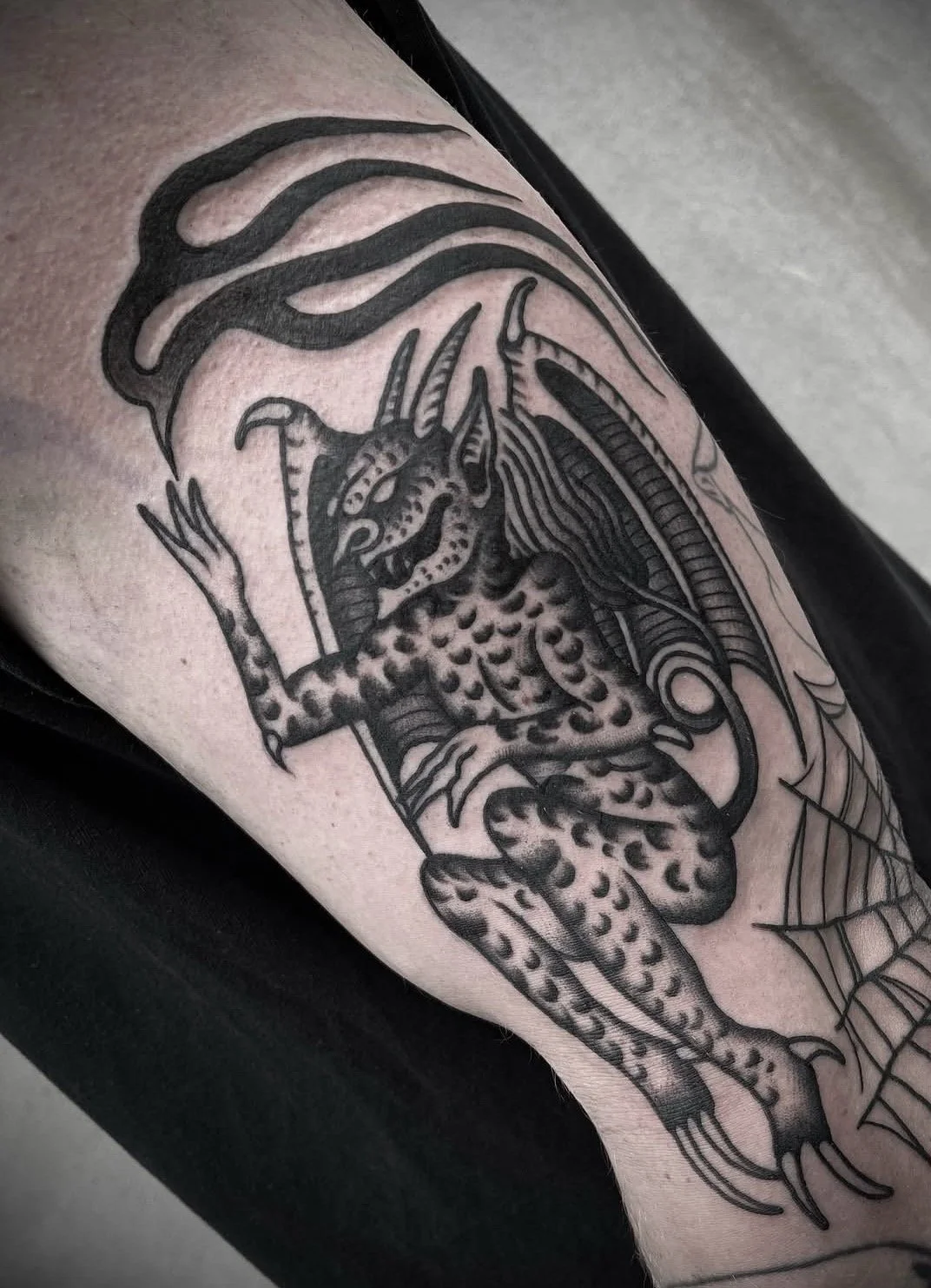
Devil and demon tattoos are a great fit for bold traditional work — thick black outlines and a limited, punchy colour palette (classic red skin, black detailing, sometimes green or purple for a more folklore-inspired demon) are what make this design pop and hold up well over time.
They work beautifully as a standalone piece on the chest, forearm or calf, but also slot easily into a larger traditional sleeve or back piece alongside flames, skulls, daggers or roses — the contrast of a devil grinning next to something soft like flowers is a classic traditional trick.
If you’d like to find out more about traditional devils and demon tattoos, click the link below!