
Japanese Crane Tattoo Meaning
-
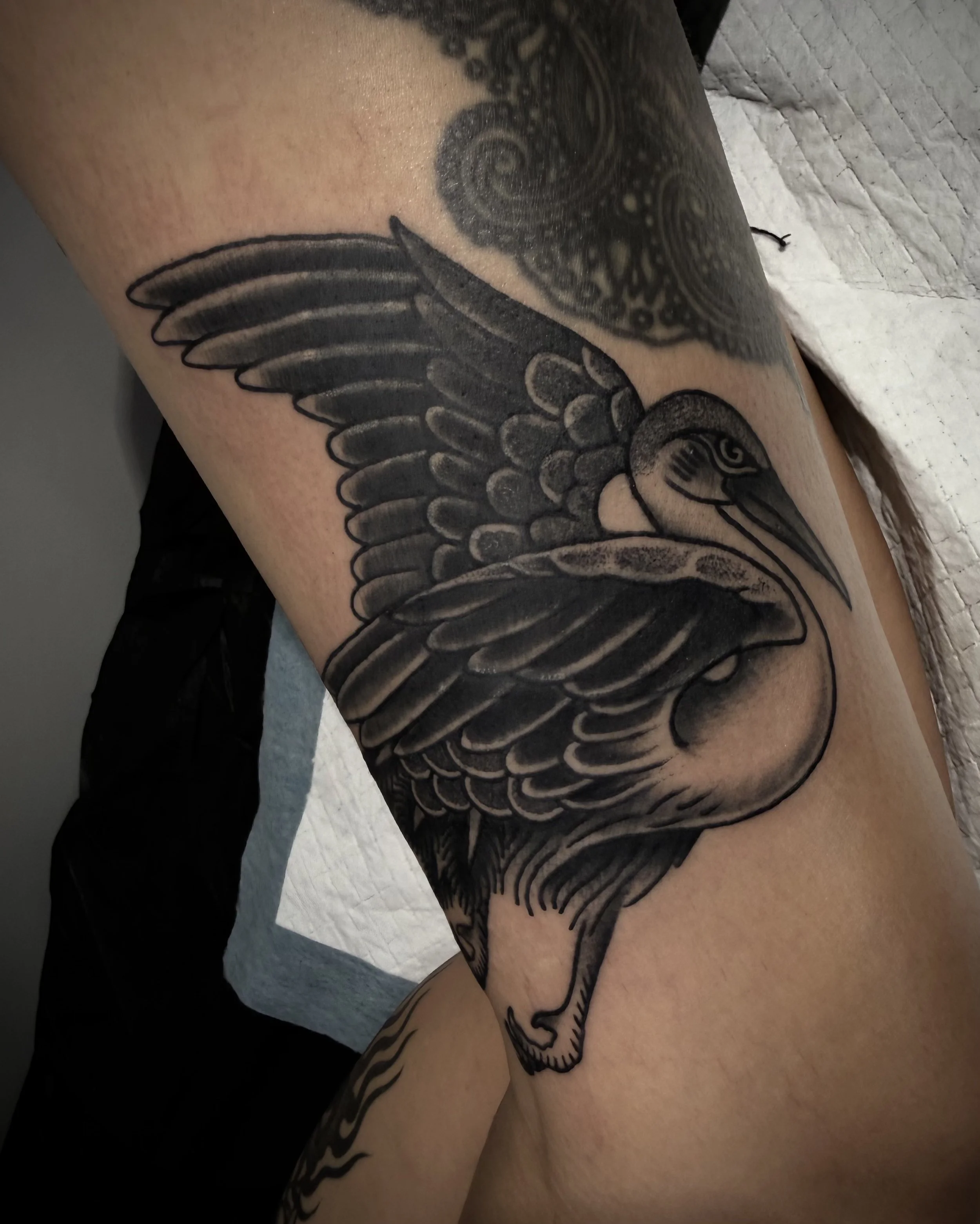
Background & Mythology of Japanese Crane Tattoo
The crane, or tsuru (鶴), has been treasured in Japan for centuries. It is regarded as a mystical, almost sacred bird, and an old Japanese saying holds that "cranes live a thousand years". The number is a poetic way of saying a very long time, rather than an exact lifespan.
Cranes appear throughout Japanese art, on folding screens, kimono, lacquerware and woodblock prints. The best known crane in Japan is probably the origami crane. The tradition of folding a thousand of them, called senbazuru, is one of the most recognisable symbols of hope and good fortune. -

Symbolism of Japanese Crane Tattoo
The crane is one of the most positive subjects in Japanese tattooing. Common meanings include:
Longevity and a long, healthy life
Good fortune and happiness
Peace and hope
Fidelity and devotion, as cranes are known for staying with one partner
Grace and elegance
Perseverance through hard times
Senbazuru carries a particular meaning. People fold thousands of paper cranes as a wish for recovery from illness or as a prayer for peace, and the best known story is that of Sadako Sasaki in Hiroshima. For that reason, a crane tattoo is sometimes chosen to mark hope, healing or someone's memory.
-
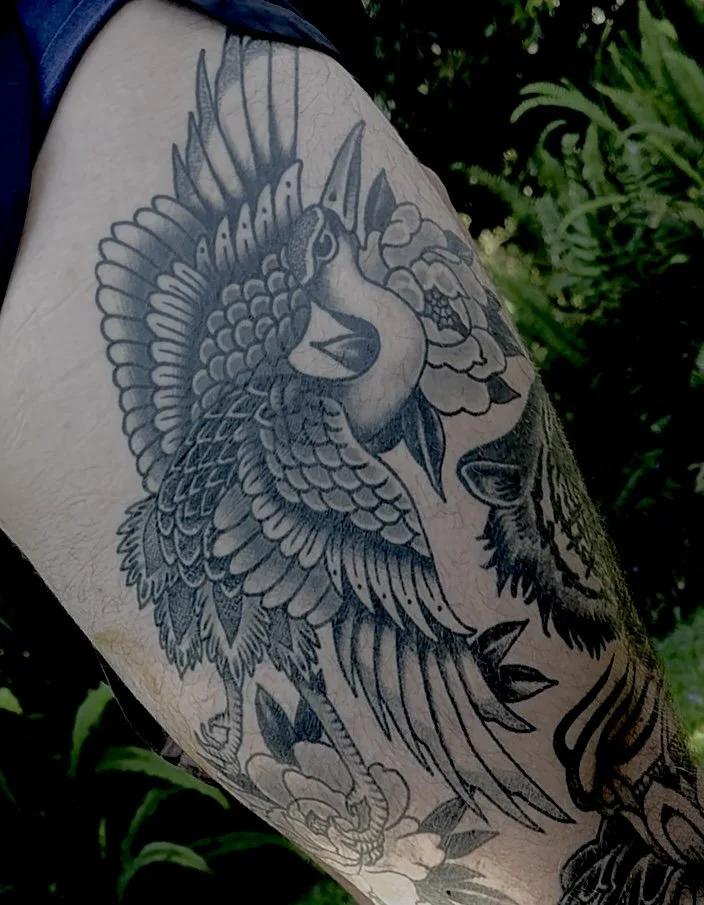
Getting a Japanese Crane Tattoo
Cranes have long necks, long legs and wide wings, which suit tall, flowing placements like the arm, thigh or ribs. They work well in bold traditional Japanese colour or in black and grey. The red-crowned crane, with its red patch on top of the head, is a favourite for adding a pop of colour.
Cranes are often tattooed with pine trees, waves, clouds, the rising sun or cherry blossoms. These all stand for long life and good luck too, so they strengthen the meaning of the design. A crane also pairs well with a turtle, since both are Japanese symbols of longevity.
If you would like to find out more about Japanese crane tattoos here at Louielou Tattoo, press the book now button below!